


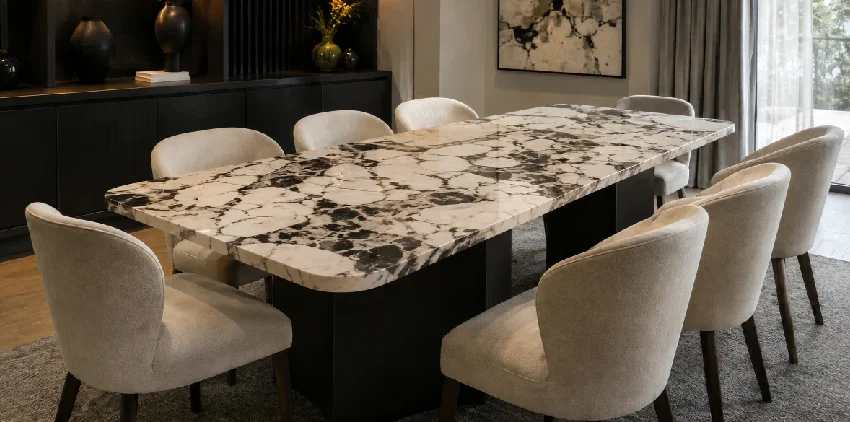
Marble vs Wood Dining Tables: Which One Belongs in Your Dining Room?
You walk into your dining room and something feels unfinished. The chairs work, the lighting feels warm, and the colors finally speak the same language, yet the room still lacks its defining moment. Then your eyes land on the table. Suddenly, the question becomes impossible to ignore: should you choose the cool, sculptural drama or marble, or the inviting character of wood? Both can transform a dining space, but they tend to tell very different stories. One feels polished and architectural; the other feels grounded and familiar. Choosing between them is not simply about appearance. It is about about how you gather and live.
The Table Sets the Entire Dining Story
A dining table does far more than provide somewhere to place plates. It anchors the room, influences how other furniture appears, and creates the setting for everyday conversations, celebrations, hurried breakfasts, and lingering dinners.
This is why choosing between marble and wood deserves more thought than simply asking which material looks attractive in a photograph.
Imagine two identical dining rooms. Place a marble table in the first, and the space can immediately appear refined, modern, and visually striking. Put a wooden table in the second, and the atmosphere may become warmer, softer, and more relaxed.
Neither choice automatically wins. The right table is the one that understands your room, and perhaps more importantly, your lifestyle.
Marble Makes an Entrance Without Saying a Word
There is something undeniably captivating about marble. Natural veining gives every surface its own visual personality, meaning your dining table can feel less like ordinary furniture and more like a statement within the room.
Marble works particularly well when you want the dining area to have a polished, design-led identity. Its smooth surface and distinctive patterns naturally attract attention, even when styling is kept simple.
Picture a marble dining table beneath a sculptural pendant light, surrounded by streamlined chairs. You don’t need an army of accessories competing for attention. The material already provides movement, pattern, and visual interest.
This makes marble especially appealing for modern interiors where fewer, stronger pieces are allowed to command attention.
Wood Brings Warmth to the Conversation
If marble enters the room with presence, wood arrives with warmth.
Wooden dining tables have an inviting quality that can make a dining area feel immediately approachable. Grain patterns, natural tones, knots, and subtle variations give the material character without demanding attention.
Think about a relaxed Sunday lunch. Plates move around the table, conversations overlap, someone reaches across for another serving, and nobody feels as though the room needs to remain ideally staged. Wood naturally fits into that picture.
It also works beautifully across numerous interior directions. Clean-lined wooden tables can complement modern spaces, while textured finishes can support rustic or relaxed schemes. Darker woods create depth, while lighter finishes can keep compact rooms feeling visually open.
The result is a material that adapts easily while retaining its distinctive personality.
Consider the Atmosphere You Want to Create
Before comparing practical details, ask a simpler question: how should your dining room feel?
If you want a crisp, sophisticated, gallery-inspired environment, marble can provide the visual drama required to establish that mood. Its cool appearance can make even relatively simple dining arrangements feel deliberate.
Wood offers another emotional direction. It tends to soften a room and can create a sense of familiarity, making it appealing for spaces designed around casual meals and frequent gatherings.
Your wider interior should influence the decision as well. A room already filled with timber flooring and wooden cabinetry mat benefit from marble introducing contrast. Alternatively, an interior dominated by glass, metal, stone, or neutral surfaces may feel more welcoming once wood enters the picture.
Sometimes the right table is not the material already appearing everywhere. It is the material that completes the balance.
Think About Everyday Life, Not Just Dinner Parties
This is where showroom excitement needs to meet reality.
It is easy to imagine your new dining table beautifully styled with flowers, candles, elegant plates, and ideally positioned chairs. But what happens on an ordinary Tuesday?
Perhaps the table becomes a temporary workspace. Children might sit there drawing. Shopping bags land on it when you walk through the door. Coffee appears every morning. Friends tend to stay longer than planned on Friday evening.
Your table needs to make sense during these ordinary moments.
Wood can be appealing for households seeking a relaxed surface that develops character with use. Depending on its finish, small marks can sometimes blend naturally into the evolving appearance of the material.
Marble requires greater awareness. Because natural stone can react to spills and acidic substances, quick cleaning and sensible protection can help preserve its appearance.
The question becomes less about which material sounds impressive and more about which one fits your daily rhythm.
What About Durability?
Both materials can remain part of a dining room for years, but they tend to behave differently.
A solid wooden table can handle regular household activity well, although scratches, moisture, heat, and dents can affect the surface. One advantage is that certain wooden surfaces can be refinished when years of use begin showing.
Marble is naturally strong, but strength doesn’t mean immunity from damage. Scratching, staining, chipping, and etching can occur depending on the marble and how the table is used. Protective mats, coasters, and sensible cleaning habits can therefore become part of the ownership.
Instead of asking which material is simply tougher, consider what type of ageing you are comfortable seeing.
Wood often develops a lived-in personality. Marble tends to reward owners who prefer maintaining a cleaner, and more polished appearance.
Size and Visual Weight Matter Too
Material changes how large a table feels, even when the measurements remain identical.
Marble often has stronger visual weight because of its stone surface, bold veining, and substantial appearance. In a spacious dining area, this can create an impressive focal point. In a smaller room, thoughtful proportions become important so the table doesn’t dominate everything surrounding it.
Wood provides more flexibility visually. Pale finishes and slender designs can appear light and airy, while darker tones and thicker forms can establish a stronger presence.
Before choosing, measure your dining space and consider circulation around the table. Remember that chairs require room to move backwards comfortably.
A beautiful table becomes far less appealing when everyone needs a sideways shuffle simply to reach their seat.
Styling Marble: Let the Material Dominate
The secret to styling marble is knowing when to stop.
Because the surface already contains natural pattern, excessive decoration can compete with its visual character. Consider streamlined dining chairs, understated tableware, and one intentional centerpiece rather than covering every available centimeter.
Contrast can create particularly interesting results. Soft upholstered chairs can balance marble's harder appearance, while timber details can introduce warmth. Metallic accents can bring another layer of sophistication without overwhelming the setting.
Lighting also deserves attention. A pendant positioned above the table can draw the eye towards the veining and make the surface feel like an intentional centerpiece after sunset.
Give marble room to perform, and it rarely needs much supporting decoration.
Styling Wood: Build Around Texture and Warmth
Wood invites layering.
You can combine a wooden dining table with woven seating, upholstered chairs, ceramics, textured runners, and greenery without making the setting feel overly complicated.
That doesn’t mean wooden dining spaces need to look traditional. Pair a clean timber table with modern chairs and minimal lighting, and the result can feel remarkably current.
For a bolder look, experiment with contrast. Dark chairs around lighter wood can create definition, while softer neutral upholstery can make deeper timber shades feel balanced.
The beauty of wood lies in its flexibility. It can become the quiet foundation beneath expressive styling or remain the central feature in a restrained room.
Make Your Dining Table Feel Like Home
The real marble versus wood debate has no universal winner, and that is precisely what makes the decision interesting.
Marble brings drama, individuality, and visual refinement. Wood deliver warmth, versatility, and familiar character. Both can create remarkable dining rooms when selected with the space, lifestyle, and desired atmosphere in mind.
So look beyond the product photograph. Think about weekday breakfasts, birthday dinners, unexpected guests, quiet coffees, and conversations that stretch late into the evening.
Your dining table will witness all of them.