


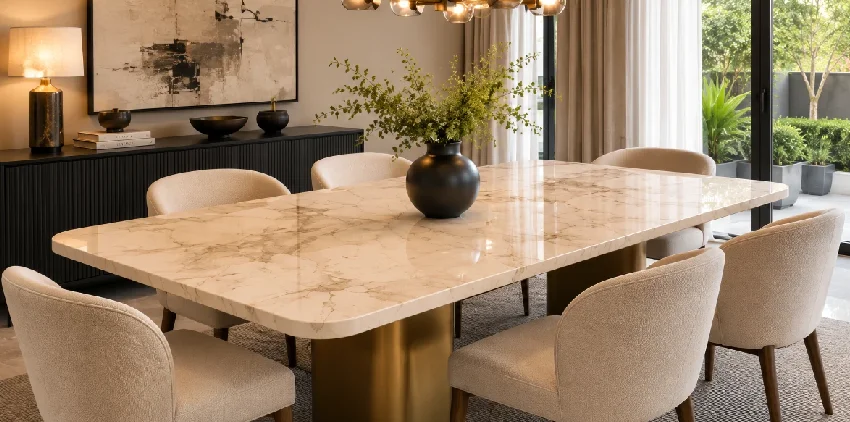
Small Dining Room, Big Style: Can a Marble Dining Table Make It Work?
A small dining room can make every furniture decision feel like a puzzle. One table looks stunning but swallows the floor. Another fits comfortably yet leaves the room feeling forgettable. Then marble enters the picture: elegant, expressive, and seemingly made for spacious interiors. But is that reputation deserved? The right marble dining table can bring definition, light, and personality to a compact room without making it feel crowded. The secret lies in choosing with intention. From shape to proportions to color, seating, and styling, a few thoughtful decisions can turn limited square footage into a dining space with remarkable presence.
Small Does Not Have to Mean Ordinary
When space is limited, decorating advice often becomes painfully predictable; choose tiny furniture, keep everything pale, avoid statement pieces, and make yourself comfortable with compromises.
But a small dining room doesn’t need to whisper.
In fact, one strong focal point can give a compact room more personality than several smaller decorative additions. A marble dining table can play exactly that role. Its natural veining brings pattern, while its smooth surface introduces visual refinement without requiring piles of accessories.
The trick is understanding scale.
You are not trying to squeeze an enormous stone table into a room that cannot accommodate it. You are searching for a proportionate design that earns its place visually and practically.
Get that relationship right, and marble can make a small dining area feel intentionally designed rather than simply undersized.
Start With the Space Around the Table
Before falling for dramatic veining or an interesting base, measure your room with attention.
Then measure it again.
A common mistake is considering only whether the table physically fits. Your dining room also needs enough surrounding space for chairs to move and people to walk comfortably.
Imagine dinner with four guests. Everyone sits down, chairs move backwards, someone gets up for another drink, and another person walks behind them. Does the layout still function?
That everyday movement should guide your dimensions.
You can even mark the proposed table footprint on the floor using removable tape. Place your existing chairs around the outline and move through the room as you normally would.
Suddenly, measurements become much easier to understand.
A marble table should anchor your dining area, not barricade it. Leaving breathing room around the furniture can make both the table and room appear more considered.
Round Marble Tables Can Be Small-Space Heroes
Corners occupy space visually and physically, which is why round dining tables can work beautifully in compact rooms.
A round marble table creates a softer outline, allowing movement to flow naturally around it. Without sharp corners projecting into walkways, a small dining area can feel easier to navigate.
There is also a social advantage.
Round tables naturally brings diners towards one another, creating an intimate setting where conversation feels easy. In a compact home, where dining spaces are often designed around small gatherings, that atmosphere can feel especially appropriate.
Look for a diameter that accommodates your usual number of diners without overwhelming the room. A central pedestal base can also be useful because it removes corner legs and may provide greater flexibility when positioning chairs.
Add distinctive marble veining, and a practical shape suddenly becomes an active design feature.
Do Not Ignore Oval Designs
Suppose you love the softness of a round table but need slightly more surface area. An oval marble table could provide the middle ground.
Its elongated shape works particularly well in narrow dining areas, while curved ends help reduce the visual heaviness associated with a large rectangular surface.
Those curves also encourage smoother movement through tighter spaces.
An oval table can create an interesting illusion: it provides noticeable presence without appearing aggressively bulky. Combined with slender chairs and an understated base, it can make the room feel polished while preserving practical circulation.
This shape is worth considering when your dining room needs to accommodate several people but cannot comfortably handle pronounced corners.
Instead of asking how much table you can squeeze into the room, ask how gracefully the table can coexist with everything around it.
That shift in thinking makes smaller spaces much easier to furnish.
Choose Marble Colours With the Room in Mind
Color has enormous influence over how substantial furniture appears.
In compact dining rooms, lighter marble can create an airy impression because it reflects light and visually connects with pale walls or flooring. White, cream, soft gray, and gently patterned surfaces can provide character without making the center of the room appear excessively heavy.
That doesn’t mean darker marble is forbidden.
Deep stone shades can look striking in smaller interiors, particularly when the surrounding palette is balanced and sufficient natural or artificial light is available. A dark marble table against lighter walls can become a dramatic centerpiece rather than a visual burden.
Consider the amount of daylight entering your room, existing materials, flooring, and nearby furniture before deciding.
Marble should create a relationship with its surroundings.
When its colors echo or deliberately contrast with elements already present, the table feels connected to the room rather than dropped into it.
Let the Veining Create the Decoration
Small rooms can become visually crowded surprisingly quickly.
A patterned rug competes with artwork. Decorative objects compete with lighting. Then table accessories join the conversation until every surface seems determined to speak simultaneously.
Marble gives you an opportunity to simplify.
Natural veining already creates movement and visual interest across the table surface. Instead of covering that character, allow it to become part of the decoration.
A simple vase, restrained bowl, or small arrangement may be enough for everyday styling. When hosting dinner, tableware can add another layer without permanently cluttering the room.
This restrained approach has two advantages. First, your marble remains visible. Second, reducing unnecessary accessories can make a compact dining room feel calmer and more spacious.
Sometimes big style comes from adding the right feature.
Other times, it comes from knowing exactly what you can leave out.
Pair Your Table With Visually Light Chairs
Your marble table only half of the dining equation.
Bulky chairs surrounding a compact table can quickly make the entire arrangement appear crowded. Instead, consider seating with slimmer frames, open backs, subtle curves, or narrower profiles.
The idea is to create contrast between the visual solidity of stone and the lighter appearance of seating.
Materials can help achieve that balance too. Timber introduces warmth, metal can add modern definition, and upholstered details can soften marble’s cooler character.
Avoid assuming that chairs must ideally match the table. Thoughtful contrast often creates a more interesting dining space.
Also consider how easily the chairs tuck underneath. In a smaller room, every centimeter matters when the dining area is not being used.
A chair that slides neatly beneath the table surface can quickly return valuable circulation space and keep the room looking organized between meals.
The Base Can Change Everything
People naturally focus on the marble surface, but in a compact dining room, the base deserves equal attention.
Four thick legs can consume valuable visual and physical space beneath a smaller table. Depending on the design, a central pedestal may provide a cleaner alternative and make seating arrangements more flexible.
The base also influences how substantial the entire piece appears.
A heavy stone base can create dramatic sculptural presence, while a slimmer metal or streamlined support can make the table seem lighter. Neither approach is automatically right; the decision depends on the effect your room needs.
If the dining area already contains strong architectural details or visually substantial furniture, a simpler base may provide the necessary balance.
If the room feels plain, an interesting pedestal could turn the table into its defining feature.
Look beneath the surface before buying. Great small-space design often depends on details shoppers tend to initially overlook.
So, Can Marble Really Work in a Small Dining Room?
Absolutely, provided you choose for the room you actually have.
The successful marble dining table is not necessarily the smallest one you can find. It is the table whose proportions, shape, color, and visual character work naturally with the available space.
Measure before shopping. Consider round or oval shapes where movement is limited. Explore lighter marble when you want an airy feeling, or use darker stone deliberately for contrast. Pair the surface with visually lighter chairs, thoughtful lighting, and restrained decoration.
Above all, stop seeing limited space as a reason to settle for forgettable furniture.